How to clean mould off a ceiling safely, and when to stop and call someone
A small patch on a painted ceiling is a job you can do yourself in an afternoon. Here is how to do it without spreading spores, and the point at which DIY stops being sensible.
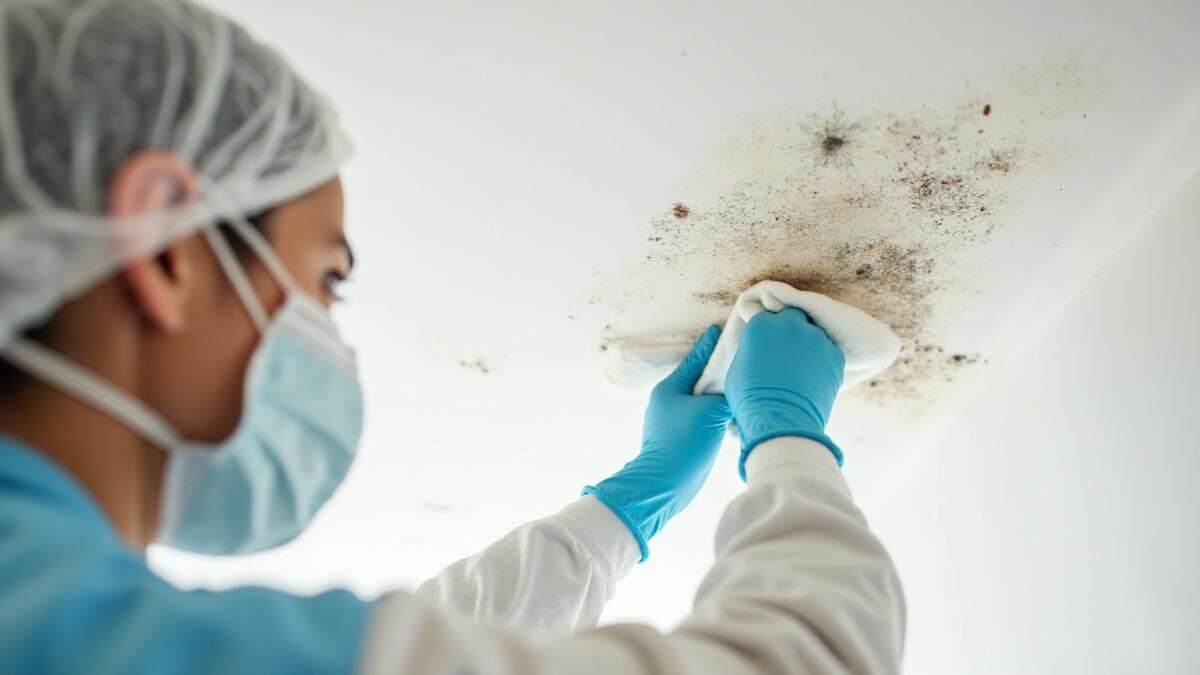
Ceilings collect the warm wet air from showers, cooking and drying clothes, and they are usually the coldest surface in the room. That combination is why mould shows up there first, normally in a bathroom or above a bed against an outside wall.
A small patch on sound paintwork is genuinely a DIY job. The two things that go wrong are people scrubbing it dry, which throws spores around the room, and people cleaning it without ever finding out why it is wet, which means it comes straight back.
Work out whether this is your job at all
Clean it yourself if all of these are true:
- The affected area is roughly one square metre or less
- It is on painted plaster or another hard, sound surface
- No sewage or flood water has been involved
- Nobody in the house is pregnant, elderly, immunocompromised, or has asthma or another respiratory condition
Get a professional in if any of these apply:
- The patch is bigger than a square metre, or you cannot see where it ends
- It keeps coming back in the same place
- It is on something porous like ceiling tiles, plasterboard that has gone soft, or loft insulation
- The paint is flaking or the plaster feels damp and spongy
- It is anywhere near the ventilation system, or there has been contaminated water
Find the water first
If the mould is being fed by a leak, a failed roof detail or perished mastic around a shower, cleaning it is a temporary result. Fix the moisture source or you will be doing this again in a few months.
What you need
- An FFP2 or N95 respirator. A surgical mask does nothing useful here
- Disposable gloves and goggles that seal, since you are working above your head
- Long sleeves you can wash hot afterwards
- Warm water and washing-up liquid, or a proprietary mould spray used to the label
- Microfibre cloths and a spray bottle
- Bin bags and dust sheets
Do not mix bleach with any other cleaner. Bleach and ammonia together produce chloramine gas, and plenty of household products contain ammonia without saying so on the front of the bottle.
The method
- Shut the door, open the window. Closing the internal door stops spores drifting into the rest of the house. Cover anything below you.
- Put the PPE on before you disturb anything.
- Mist the area lightly. Damp, not soaked. Wet spores do not become airborne, which is the entire point.
- Wipe from the outside in. Start on clean ceiling just beyond the mould and work toward the middle so you are not smearing it into fresh territory. Never scrub a dry surface.
- Change cloths often. A loaded cloth just redistributes what you have picked up. Bag used ones as you go rather than rinsing them in the sink.
- Treat any remaining stain. Reapply the cleaner rather than attacking it with an abrasive, which will take the paint off and leave a more absorbent surface behind.
- Bag everything and wash down. Cloths, gloves and dust sheets go in the bag, tied, straight in the outside bin. Wipe the floor. Wash your hands and arms properly.
- Dry the room fast. Extractor on, window open. The faster the surface dries, the less chance anything that survived gets going again.
Ceiling tiles and anything porous
Mould on porous material has grown into it, not onto it. Wiping the surface removes the visible colony and leaves the rest. Suspended ceiling tiles, soft plasterboard and loft insulation all need taking out and replacing rather than cleaning.
Stopping it coming back
Cleaning treats the symptom. These are the things that actually change the outcome:
- Extraction that works. Hold a sheet of paper to the bathroom fan. If it does not hold, the fan is not moving enough air. Run it during the shower and for 15 to 20 minutes afterwards.
- Shut the bathroom door while showering and open the window when you finish, rather than the other way round.
- Keep humidity between 40 and 60 percent. A cheap hygrometer tells you where you are.
- Low steady background heat in cold weather. Cold surfaces are what condensation forms on. Short blasts of high heat are worse than a low constant.
- Stop drying clothes on radiators. A single wash load puts a couple of litres of water into the air. If you have no choice, do it in one room with the window open or a dehumidifier running.
- Use mould-resistant paint once it is dry, not before, and not as a substitute for fixing the cause.
If you rent
Report it in writing and keep the reply. Social landlords in England have been working to legal deadlines since October 2025, and persistent damp is usually a repair issue rather than something you caused. Our guide to Awaab's Law sets out what has to happen and how quickly.
Common questions
Is bleach the best thing to use?
Not especially. It lightens the stain, which makes it look more effective than it is, and on a porous surface it leaves water behind. Detergent and water plus proper drying does the job on hard surfaces.
Does vinegar work?
On hard non-porous surfaces it is a reasonable option and some people prefer it to bleach. Ventilate the room, and never combine it with bleach.
How dangerous is ceiling mould?
Living with damp and mould is linked to more respiratory symptoms and worse asthma, and the risk is higher for children, older people, and anyone immunocompromised. It is not a reason to panic about a small patch, and it is a good reason not to leave a large one.
Why does it keep coming back in the same corner?
Almost always a cold spot: a thermal bridge at a wall junction, missing insulation above, or a spot the extractor never reaches. Until the surface is warmer or the air is drier, that corner will keep condensing.
Sources
- NHS inform: damp and mould indoors
- GOV.UK: damp and mould, health risks and the response required
- WHO guidelines for indoor air quality: dampness and mould
- US EPA: mold cleanup in your home
Reviewed on 15 August 2026.