Mould in Corner of Bedroom: UK Guide & Remediation
Discover why mould forms in bedroom corners, its health risks, and how professional remediation following IICRC S520 protects your UK home.
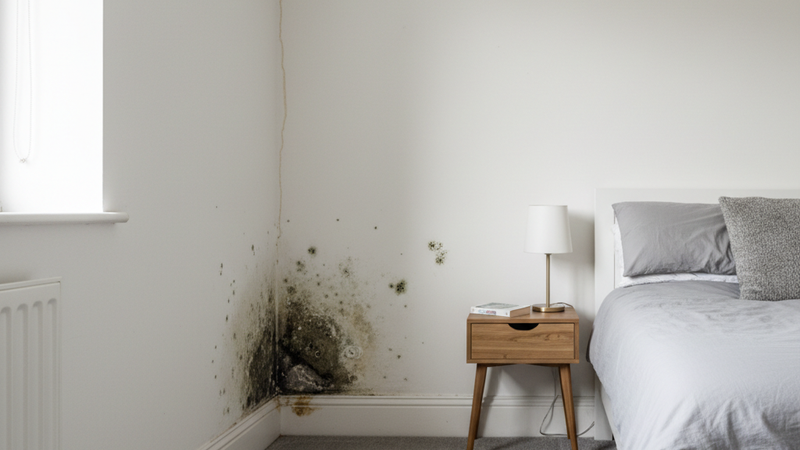
Discovering mould in the corner of your bedroom can be a worrying sign, indicating underlying moisture issues that need immediate attention. In the UK, common problems like condensation, poor ventilation, and penetrating damp often contribute to fungal growth in these specific areas, posing potential health risks and structural damage if left untreated.
Understanding Mould Growth in Bedroom Corners
Bedroom corners are particularly susceptible to mould growth due to a combination of environmental factors. These areas often experience reduced airflow and lower surface temperatures, creating ideal conditions for condensation to form and perpetuate.
Why Corners Are Prime Mould Spots
Corners are typically “cold spots” within a room. This is because they are often external walls, cooled by the outside air, and airflow is naturally restricted. Furniture placed close to corners further exacerbates this by limiting air circulation, trapping moisture, and preventing surfaces from drying out properly. This consistent dampness, even at microscopic levels, provides the perfect breeding ground for mould spores.
- Thermal Bridging: External corners can act as thermal bridges, transferring cold from outside more efficiently than flat wall sections, leading to colder internal surface temperatures.
- Reduced Airflow: Air movement is naturally lowest in corners, meaning humid air lingers and condensation builds up faster and stays longer.
- Furniture Placement: Wardrobes or beds pushed against walls prevent air circulation, trapping moisture between the furniture and the wall.
Common Causes of Bedroom Corner Mould
Mould in bedrooms is almost always a symptom of a moisture problem. Identifying the root cause is crucial for effective long-term remediation. Without addressing the source, mould will inevitably return.
- Condensation: The most prevalent cause in UK homes. Warm, moist air (from breathing, showering, cooking) comes into contact with cold surfaces (external walls, windows), causing water droplets to form. Bedrooms, especially where people sleep for hours, generate significant moisture.
- Penetrating Damp: Water ingress from outside due to structural defects like faulty gutters, cracked rendering, damaged roofs, or leaking pipes. This type of damp can be more insidious, often appearing as dark, localised patches.
- Rising Damp: Less common in upper floors but can affect ground floor bedrooms. This occurs when moisture from the ground travels up through capillaries in porous masonry due to a failed or absent damp-proof course (DPC).
- Leaking Pipes: Hidden leaks within walls from plumbing (e.g., from an upstairs bathroom or radiator pipes) can saturate wall materials, leading to mould growth that only becomes visible when it breaks through the surface.
Important point
Never attempt to simply paint over mould. This will not eliminate the problem and can actually trap moisture, making the underlying issue worse and potentially spreading the mould behind the new paint layer.
Health and Safety Concerns of Bedroom Mould
Mould isn't just unsightly; it can pose significant health risks, especially for vulnerable individuals. The spores, fragments, and volatile organic compounds (VOCs) released by mould can be inhaled, acting as irritants, allergens, and in some cases, toxins.
Potential Health Impacts
Living in a mouldy environment can lead to a range of health complaints. The NHS states that mould and damp can affect your health, particularly if you have asthma, allergies, or other respiratory conditions. Children and the elderly are also more susceptible.
- Respiratory Issues: Coughing, wheezing, shortness of breath, aggravated asthma (see NHS guidance on damp and mould).
- Allergic Reactions: Sneezing, runny nose, red eyes, skin rashes.
- Fungal Infections: In rarer cases, individuals with severely compromised immune systems can develop fungal infections.
- Mental Health: The stress and unhealthiness of living in a mouldy home can contribute to anxiety and depression.
Risk Assessment and Vulnerable Groups
The Health and Safety Executive (HSE) provides guidance on managing risks related to biological agents, including mould. Employers and landlords have duties to assess and manage risks from mould exposure. For homeowners, understanding these risks is equally vital, particularly when children or individuals with pre-existing conditions are present.
- Asthma and Allergy Sufferers: Mould spores are potent allergens and triggers for asthma attacks.
- Infants and Young Children: Their developing respiratory systems are more vulnerable to irritants.
- Elderly Individuals: Often have weaker immune systems and pre-existing respiratory conditions.
- People with Compromised Immune Systems: (e.g., undergoing chemotherapy, HIV/AIDS patients) are at higher risk of infections.
UK Regulations, Standards, and Best Practices
Mould remediation in the UK is governed by several guidelines and legislative frameworks, ensuring that professional services adhere to safe and effective practices. Adhering to these standards is crucial for public health and property protection.
IICRC S520 Guidelines for Mould Remediation
The Institute of Inspection, Cleaning and Restoration Certification (IICRC) S520 standard is the globally recognised consensus-based standard for professional mould remediation. Although developed in the US, it is widely adopted and considered best practice within the UK mould remediation industry.
- Containment: Establishing physical barriers to prevent mould spores from spreading to uncontaminated areas.
- Air Filtration: Using HEPA-filtered air scrubbers to remove airborne mould spores.
- Source Removal: Physically removing mould-affected materials, rather than just cleaning them. This is key to preventing recurrence.
- Moisture Control: Identifying and fixing the moisture source to prevent future growth.
- PPE: Mandating appropriate personal protective equipment for technicians.
Professional remediators follow these guidelines to ensure a safe and thorough decontamination process, protecting both occupants and technicians.
Housing Health and Safety Rating System (HHSRS)
For rented properties, the Housing Health and Safety Rating System (HHSRS) is a risk-assessment tool used by local authorities to assess potential hazards in residential properties. Damp and mould growth are classified as a significant hazard under the HHSRS.
- Category 1 Hazard: Severe cases of damp and mould can be classified as a Category 1 hazard, requiring immediate action from landlords.
- Landlord's Responsibility: Landlords have a legal duty to provide a safe and healthy environment for their tenants, which includes addressing damp and mould. Recent legislation like Awaab's Law further strengthens these responsibilities.
- Tenant's Rights: Tenants experiencing mould issues should report them to their landlord immediately and can contact their local council's environmental health department if the landlord doesn't respond adequately.
Professional Mould Remediation Process
When facing mould in your bedroom corner, especially if it's larger than about 1 square metre or you're experiencing health symptoms, professional remediation is the safest and most effective course of action. This multi-step process ensures thorough removal and prevents recurrence.
Assessment and Containment
The first step involves a comprehensive assessment to determine the type and extent of mould growth, as well as identifying the moisture source. Highly trained professionals will use specialised equipment to detect hidden moisture and map the affected areas.
- Initial Inspection: Visual inspection, moisture mapping using hygrometers and thermal cameras to identify the extent of water intrusion and mould.
- Sampling (Optional): In complex cases, air or surface samples might be taken for laboratory analysis to identify mould species and concentrations.
- Containment Set-Up: For areas larger than 1 square metre (roughly the size of a bath towel), containment barriers (e.g., plastic sheeting, negative air pressure machines) are erected to prevent cross-contamination of unaffected areas.
Removal and Decontamination
The core of remediation involves safely removing mould-infested materials and decontaminating the affected surfaces. This step adheres strictly to IICRC S520 guidelines, prioritising safety and effectiveness.
- Moisture Source Rectification: The primary moisture source must be fixed before remediation begins.
- Material Removal: Porous materials (e.g., plasterboard, insulation, carpets, wood) heavily contaminated with mould are carefully removed, bagged, and disposed of according to local regulations.
- Surface Cleaning: Non-porous surfaces (e.g., metal, solid wood, concrete) are thoroughly cleaned using HEPA-vacuuming, wire brushing, and appropriate antimicrobial solutions.
- Air Scrubbing: HEPA air scrubbers run continuously during and after remediation to capture airborne mould spores.
- Drying: Industrial dehumidifiers and air movers are used to thoroughly dry out the affected area, preventing future growth.
Post-Remediation Verification
Once remediation is complete, a final inspection ensures that the mould has been effectively removed and the environment is safe. This may include follow-up testing.
- Final Visual Inspection: Ensuring no visible mould remains.
- Moisture Readings: Confirming that moisture levels have returned to normal, acceptable ranges.
- Clearance Testing (Optional): Air or surface samples may be taken and sent to an independent lab to verify that spore counts are back to baseline levels, ensuring the area is safe for re-occupancy.
What to expect from a professional
A reputable mould remediation company will provide a detailed scope of work, transparent pricing (for a reliable estimate, try our mould removal cost calculator), and a post-remediation report. They should be certified by organisations like IICRC.
Prevention and Maintenance Strategies
Preventing mould growth is far easier and less costly than remediating it. Implementing simple but effective strategies can significantly reduce the risk of mould returning to your bedroom corners.
Controlling Condensation and Humidity
Condensation is the most common cause of mould in UK bedrooms. Managing indoor humidity levels is key.
- Ventilation: Open windows regularly, especially in the morning after waking, even if only for 10-15 minutes. Use extractor fans in bathrooms and kitchens.
- Heating: Maintain a consistent, moderate temperature throughout the home. Avoid drastic temperature drops in bedrooms, especially during colder months.
- Dehumidifiers: Consider using a dehumidifier in particularly damp rooms or during peak condensation periods. Aim for indoor humidity levels between 40-60%.
- Dry Laundry Outdoors: Avoid drying clothes indoors if possible. If you must, do so in a well-ventilated area with a window open or use a condenser dryer.
Improving Air Circulation and Wall Insulation
Addressing airflow and thermal performance of your walls can drastically reduce instances of cold spots and condensation.
- Furniture Placement: Pull furniture (beds, wardrobes) away from external walls by at least 5-10cm to allow air to circulate.
- Insulation: Consider improving wall insulation (e.g., cavity wall insulation, internal wall insulation) to raise the surface temperature of external walls, making them less prone to condensation.
- Trickle Vents: Ensure windows have functional trickle vents and keep them open.
- Cleaning: Regularly clean and wipe down cold surfaces (like window frames and sills) to remove any initial moisture accumulation before mould can establish itself.
When to Call Professional Mould Remediation Specialists
While small patches of mould might be tackleable by homeowners, certain situations absolutely warrant the expertise of professional mould remediators to ensure safety and effectiveness.
Indications for Professional Intervention
Knowing when to seek professional help is critical. Don't underestimate the potential health risks and the complexity of complete mould removal.
- Area Larger Than 1 Square Metre: Any mould patch larger than about 1 square metre (roughly the size of a bath towel) indicates a significant problem requiring professional containment and removal.
- Persistent Odour: A strong musty smell, even if mould isn't visible, suggests hidden mould growth within walls or under flooring.
- Health Symptoms: If occupants are experiencing chronic respiratory issues, allergic reactions, or other unexplained health problems that worsen at home, mould is a likely culprit.
- Recurrent Mould: If mould keeps returning after your own cleaning attempts, the underlying moisture source hasn't been adequately addressed, or spores remain embedded in materials.
- Flood or Water Damage: If mould appears after a flood, burst pipe, or significant water leak, professional assessment and structural drying are essential.
- Vulnerable Occupants: Homes with infants, elderly, or individuals with asthma, allergies, or compromised immune systems should always opt for professional remediation, even for smaller mould issues.
Benefits of Professional Mould Remediation
Engaging certified professionals offers numerous advantages over DIY attempts, ensuring a safe, thorough, and lasting solution to your mould problem.
- Expertise: Professionals have the knowledge to correctly identify mould types, determine the source of moisture, and execute remediation according to IICRC S520 standards.
- Specialised Equipment: Access to industrial-grade dehumidifiers, air scrubbers, HEPA vacuums, and personal protective equipment (PPE) not available to the average homeowner.
- Containment & Prevention of Spread: They employ containment strategies to prevent mould spores from spreading to other areas of your home during the removal process.
- Thorough Removal: Professionals ensure not just visible mould is removed, but also hidden mould, fungal roots (hyphae), and contaminated materials.
- Health and Safety: They take necessary precautions to protect both themselves and the home's occupants from exposure to mould spores during remediation.
- Long-Term Solutions: Beyond removal, they provide recommendations for correcting the underlying moisture issues, preventing future recurrence.
Ignoring mould in your bedroom corner is not an option. It's a clear indicator of a moisture problem that needs to be located and resolved. Taking prompt and professional action ensures a healthy and safe living environment. Visit our blog for more insights into mould prevention and removal.