Kensington and Chelsea trains whole housing team in Awaab's Law
The Royal Borough of Kensington and Chelsea has put 451 frontline and 214 back-office housing staff through training before Phase 2 begins, according to the UK Academy of Mould Experts.
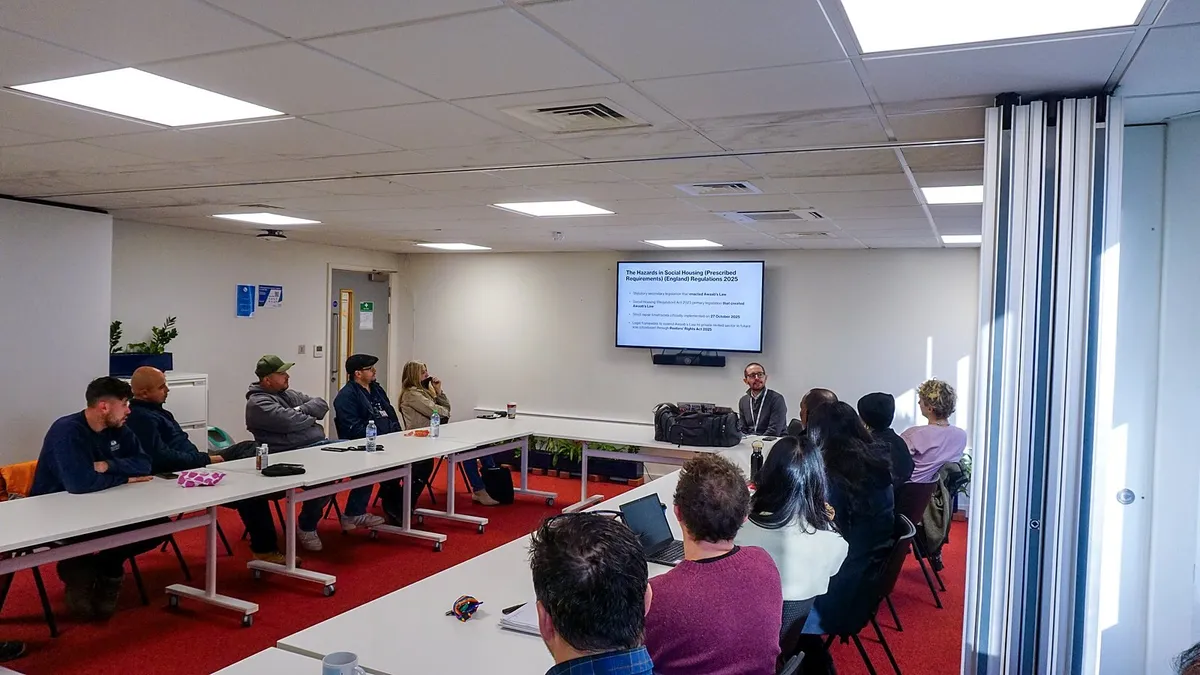
The Royal Borough of Kensington and Chelsea has trained its whole housing workforce on Awaab's Law ahead of the next phase of the rules, according to a case study published today by the UK Academy of Mould Experts (UKAME).
UKAME said 451 frontline staff were trained in person at the council's own offices, while 214 back-office staff took part in live online sessions over Microsoft Teams. There were 14 sessions in all, each lasting three hours, run between October and November 2026. The case study says the programme was due to finish on 25 November 2026, five days before Phase 2 applies on 30 November 2026.
Awaab's Law has applied to social landlords in England since 27 October 2025. From 30 November 2026, UKAME said, Phase 2 extends the fixed timescales from damp and mould to a wider set of hazards.
Why the council trained everyone
According to the case study, the council wanted every member of its housing team to understand the timescales and their own part in meeting them, not only surveyors and repairs officers. That meant frontline teams who visit homes and speak to residents, and back-office teams who take calls, log reports, raise orders and handle complaints.
Megan Finnie, Regulatory Performance Programme Manager, Housing Management at the council, was quoted as saying:
"It is not just repairs operatives, it is not just managers and senior managers, it is everyone who works for RBKC."
Kimran Sangha, Project and Change Manager at the council, said:
"If there is one thing I would take away from today, it is that anyone can look for these hazards or defects in a home. You do not need to be a surveyor to make a judgement."
UKAME said the quotes were spoken on camera at the council's offices on 19 October 2026, during the in-person sessions.
What the sessions covered
UKAME said the content of its Awaab's Law training was adapted to the council's damp and mould policy, reporting routes and repairs procedures. Phase 2 hazards, person-centred triage and record keeping were covered in every session, it said. The same trainer, Tristan Hemsley, delivered all 14 sessions.
Mr Hemsley, a Specialist Disrepair and Awaab's Law Consultant, was quoted in the case study as saying:
"The sessions we are delivering to RBKC provide a foundational awareness of Awaab's Law so that officers can apply it in their particular roles with confidence."
UKAME also said it adapted an online damp and mould awareness module for the council's learning platform, for new starters and as a refresher, and issued every attendee with a certificate of attendance.