Mould Behind Your Bed: UK Guide to Detection & Remediation
Discovering mould behind your bed is a common yet concerning issue in UK homes. Learn how to address it safely and effectively with our expert guide.
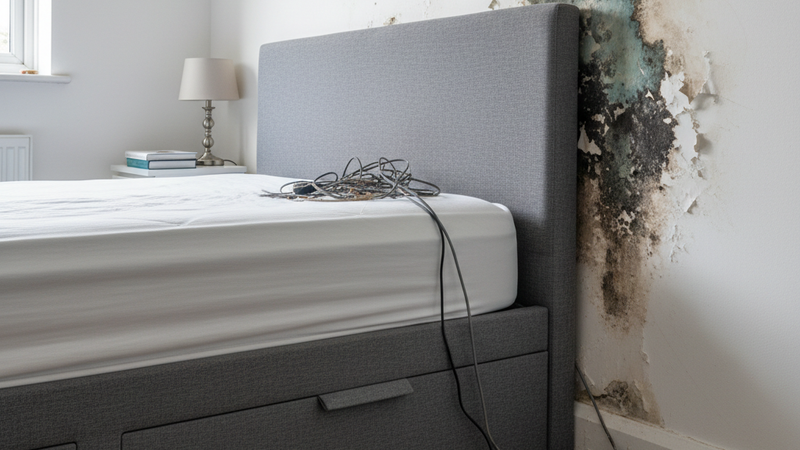
Mould behind your bed is not just an unsightly problem; it often indicates underlying dampness and can pose significant health risks in your home. This comprehensive guide, informed by expert IICRC S520 guidelines, will help UK homeowners understand, identify, and effectively remediate mould growth in this common but often overlooked area.
Understanding Mould Growth Behind Beds
Mould thrives in damp, dark, and poorly ventilated environments, making the space behind your bed an ideal breeding ground. The bed itself, pushed against a wall, creates a microclimate where moisture can accumulate and remain undetected for extended periods.
Why Bedsides are Prone to Mould
Several factors contribute to mould growth behind beds. Firstly, bodies release moisture when we sleep, which gets trapped between the bed and the wall. Secondly, the wall itself can be colder than the room's ambient temperature, leading to condensation forming on its surface. This condensation feeds microbial growth. Poor air circulation behind furniture exacerbates the problem, preventing the moisture from evaporating.
- Condensation: Warm, moist air (from breathing, heating) meets a cold surface (exterior wall), causing water droplets to form.
- Lack of Ventilation: The bed blocks airflow, trapping moisture and making it difficult for the area to dry out.
- Thermal Bridging: Exterior walls can be colder than interior walls, particularly in older UK properties or those with inadequate insulation.
- Hidden Leaks: Less commonly, a plumbing leak or roof defect on an exterior wall could be the root cause, leading to significant dampness.
Identifying Different Types of Mould
Mould comes in various colours and textures, though its appearance doesn't reliably indicate its toxicity. You might see black, green, white, or even fuzzy patches. Black mould is often a concern, commonly identified as Stachybotrys chartarum, but many other common moulds (e.g., Cladosporium, Penicillium, Aspergillus) can also appear black. Regardless of colour, any visible mould growth should be addressed, as all mould types can produce allergens and irritants.
Important point
Never attempt to identify mould types by smell or touch. If you suspect mould, keep a safe distance and consider professional inspection, especially if you have health concerns.
Health & Safety Concerns with Bedroom Mould
Mould exposure, especially within a sleeping environment, can significantly impact health. The spores released by mould can be inhaled, leading to a range of symptoms and exacerbating pre-existing conditions.
Impact on Respiratory Health
The NHS advises that mould and damp can cause respiratory problems. Mould spores are common allergens, triggering symptoms similar to hay fever such as sneezing, runny nose, red eyes, and skin rash. For individuals with asthma, mould exposure can worsen symptoms, leading to wheezing, chest tightness, and shortness of breath. Prolonged exposure can even contribute to the development of asthma in susceptible individuals, particularly children.
Other Health Risks
Beyond respiratory issues, mould exposure can lead to other health problems:
- Allergic Reactions: Skin irritation, rashes, and itching.
- Mycotoxins: Some moulds produce mycotoxins, but whether the amounts found in damp homes cause illness is not established.
- Headaches and Fatigue: General malaise, headaches, and a feeling of constant tiredness can be linked to living in a mouldy environment.
- Infections: In rare cases, particularly for individuals with compromised immune systems, mould can cause fungal infections.
The Health and Safety Executive (HSE) provides guidance on controlling airborne contaminants, including mould spores, in workplace environments, principles of which can be applied to domestic settings to protect occupants.
UK Regulations and Standards for Damp & Mould
In the UK, landlords and housing providers have a legal obligation to address damp and mould issues to ensure properties are fit for habitation. Homeowners also benefit from understanding these standards to ensure safe and effective remediation.
IICRC S520 Guidelines
While not a statutory UK regulation, the IICRC S520 Standard for Professional Mould Remediation is the internationally recognised benchmark for addressing mould contamination. It outlines best practices for assessment, containment, removal, and post-remediation verification. Professional UK mould specialists adhere to these guidelines to ensure mould is not just superficially cleaned but thoroughly removed, and the underlying moisture issue is resolved.
Housing Health and Safety Rating System (HHSRS)
The HHSRS, enforced by local authorities in England and Wales, provides a risk assessment framework for identifying hazards in homes. Damp and mould growth is explicitly listed as a potential Category 1 (serious) or Category 2 hazard. Landlords have a duty to remedy such hazards. Failure to do so can result in enforcement action, especially in light of recent legislative changes like Awaab's Law, which strengthens tenants' rights regarding unsafe housing conditions.
Professional Mould Remediation Process
Addressing mould behind your bed effectively often requires more than just scrubbing with bleach. A professional approach ensures complete removal and prevention of recurrence.
Assessment and Containment
A qualified mould remediation specialist begins with a thorough assessment to determine the extent of the mould growth, identify the moisture source, and evaluate indoor air quality. Depending on the severity, containment measures such as plastic sheeting and negative air pressure may be set up to prevent spores from spreading to uncontaminated areas of your home during remediation.
- Moisture Meter Readings: To pinpoint the source of dampness in walls or flooring.
- Visual Inspection: Looking for mould growth, water damage, and signs of leaks.
- Air Sampling (if necessary): To assess airborne spore levels and types.
- Isolation: Setting up physical barriers to protect unaffected areas.
Mould Removal and Drying Procedures
The remediation process involves physically removing the mould-affected materials. This might include cleaning hard surfaces with specialist biocides, removing and replacing mouldy plasterboard, wallpaper, or carpet. HEPA-filtered vacuums are used to capture airborne spores. Crucially, addressing the moisture source is paramount. This can involve repairing leaks, improving ventilation, or installing insulation. Thorough drying with dehumidifiers and air movers is then implemented to ensure all materials are completely dry, preventing future growth.
Post-Remediation Verification
After physical removal and drying, a post-remediation verification process ensures the area is clean and dry. This often involves visual inspection, moisture meter readings, and, in some cases, further air sampling to confirm that spore levels have returned to normal, healthy levels. This step provides assurance that the problem has been effectively resolved.
Prevention and Long-Term Maintenance
Preventing mould behind your bed is far easier and more cost-effective than remediation. Implementing simple changes can make a significant difference to indoor air quality and dampness levels.
Improving Ventilation and Airflow
Good ventilation is key to preventing condensation and dampness. Aim to:
- Pull Bed Away from Wall: Leave a gap of at least 5-10 cm between your bed and the exterior wall to allow air to circulate.
- Ventilate Regularly: Open windows for 10-15 minutes daily, even in winter, to allow moist air to escape and fresh air to enter.
- Use Extractor Fans: In bathrooms and kitchens, ensure extractor fans are used during and after showering/cooking.
- Consider Trickle Vents: Ensure any windows have functional trickle vents and keep them open.
Managing Humidity and Temperature
Maintaining a consistent indoor temperature and managing humidity levels are vital. Avoid drastic temperature drops and avoid drying clothes indoors on radiators if possible. If you must dry clothes indoors, do so in a well-ventilated room with the door closed and a window slightly open, or use a dehumidifier.
- Dehumidifiers: Highly effective in reducing overall humidity, especially in damp rooms or during colder months.
- Consistent Heating: Maintain a background heat during colder periods to prevent walls from becoming excessively cold.
- Insulation: Improving wall insulation can raise surface temperatures, reducing condensation risk. Government advice on EPCs highlights the importance of energy efficiency.
Regular Inspections and Cleaning
Periodically inspect behind your bed and other furniture for any signs of mould. Early detection makes remediation much simpler. If you find small patches, clean them promptly with a mould-killing solution (e.g., vinegar or specialist mould remover, avoiding bleach as it doesn't kill mould roots). Ensure the area is thoroughly dried afterwards.
When to Call Professional Mould Specialists
While small, superficial mould patches can sometimes be addressed by homeowners, certain situations necessitate professional intervention to ensure safety and effective long-term solutions.
Size and Severity of Mould Growth
If the mould patch behind your bed is larger than approximately one square metre (roughly a metre by a metre, or about eight A3 sheets of paper), or if it appears fuzzy, slimy, or is causing a strong musty odour, it's advisable to call in professionals. Larger infestations indicate a more significant moisture problem that requires expert assessment and specialised equipment.
Health Concerns and Underlying Issues
If anyone in the household is experiencing persistent respiratory issues, allergies, or other health problems that you suspect are linked to mould, do not attempt DIY remediation. Similarly, if you suspect the mould is due to a hidden leak, penetrating damp, or rising damp, a specialist can accurately diagnose and repair the source. Ignoring these can lead to structural damage and recurring mould issues. For insights into costs, refer to our mould removal cost calculator.
DIY vs. Professional Remediation Risks
Attempting to clean large mould infestations without proper protective equipment can expose you to high concentrations of spores, aggravating health conditions. Improper cleaning methods can also spread spores to other areas of the home, worsening the problem. Professionals have the training, PPE, and tools to safely contain and remove mould, ensuring the area is sanitised and prevented from recurring. They also offer warranties for their work, providing peace of mind. For more helpful resources, explore our blog.
Key takeaway
Addressing mould behind your bed proactively can safeguard both your property and your health. Don't hesitate to seek professional advice when in doubt. University College London and other UK universities conduct ongoing research into indoor air quality and dampness, underscoring the importance of this issue.