Dry Mould on Walls: UK Guide to Remediation & Prevention
Discover what causes dry mould on walls in the UK, its health risks, and how professional remediation and prevention can protect your home.
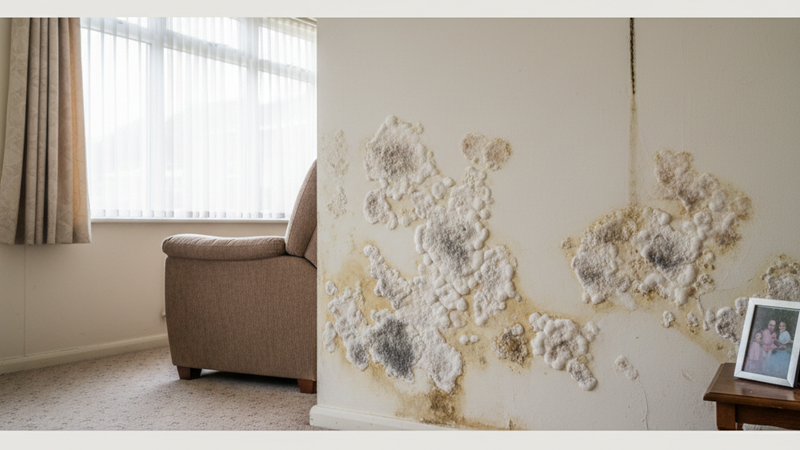
Dry mould on walls is a common and often underestimated issue in UK properties, frequently mistaken for dust or dirt. While it may not appear as visibly damp or slimy as its 'wet' counterparts, its presence indicates underlying moisture problems and can pose significant health risks and structural damage if left unaddressed. Understanding the nature of dry mould, its causes, and the appropriate remediation strategies is crucial for maintaining a healthy living environment.
Understanding Dry Mould on Walls
Dry mould refers to mould colonies that have dried out, often appearing dusty, powdery, or flaky. Unlike the wet, slimy textures of active mould growth, dry mould can be easily disturbed, releasing spores into the air. This type of mould typically occurs in areas that were once damp but have since dried, or in environments with low, but consistent, humidity levels. It's a clear indicator that moisture has, at some point, facilitated its growth.
What is Dry Mould and Where Does it Occur?
Dry mould, often black, grey, or white in appearance, is essentially mould whose moisture source has diminished or disappeared, rendering the colony dormant or less active, but still viable. It's crucial not to mistake it for mere dust. These dormant spores can reactivate with renewed moisture. Common areas for dry mould include:
- Behind furniture: Restricted airflow can trap moisture, leading to growth
- Around windows and doors: Condensation issues often create ideal conditions
- Lofts and attics: Poor ventilation and roof leaks can lead to mould in these hidden spaces
- Under wallpaper or paint: Mould can grow undetected beneath finishes, causing them to bubble or peel
Common Causes of Dry Mould in UK Homes
The presence of dry mould on walls is almost always attributable to past or present moisture issues. In the UK, common culprits include:
- Condensation: Poor ventilation, especially in bathrooms and kitchens, leads to moisture build-up on cold surfaces.
- Leaking pipes or roofs: Even small, intermittent leaks can provide enough moisture for mould to establish itself.
- Rising damp: Moisture travelling up from the ground into walls due to inadequate or failed damp-proof courses.
- Penetrating damp: Water ingress from outside, often due to damaged brickwork, faulty guttering, or cracked rendering.
- Building defects: Construction flaws that allow moisture to penetrate or accumulate within wall cavities.
Important point
Always address the underlying moisture source before attempting any mould remediation. Failure to do so will result in recurring mould growth.
Health & Safety Concerns of Dry Mould
Despite its seemingly innocuous appearance, dry mould poses significant health and safety risks, particularly due to the ease with which its spores become airborne. Inhaling these spores can trigger a range of adverse health effects, especially for vulnerable individuals.
Understanding the Health Risks
The NHS provides clear guidance on the health implications of living with damp and mould. Exposure to mould spores, even from dry mould, can lead to:
- Respiratory issues: Wheezing, coughing, shortness of breath, and exacerbation of asthma.
- Allergic reactions: Skin rashes, eye irritation, runny nose, and sneezing.
- Infections in vulnerable people: Particularly in infants, the elderly, and those with pre-existing conditions.
- Other symptoms: Headaches, fatigue, and general malaise.
High-Risk Groups
Certain individuals are more susceptible to the adverse health effects of mould exposure:
- Babies and young children
- Elderly individuals
- People with pre-existing respiratory conditions like asthma or chronic obstructive pulmonary disease (COPD)
- Those with weakened immune systems due to illness (e.g., HIV/AIDS, cancer) or medication (e.g., organ transplant recipients)
- Individuals with severe allergies
The tragic case of Awaab Ishak highlighted the severe consequences of prolonged mould exposure, particularly for young children, leading to Awaab's Law, which strengthens protections for tenants regarding housing conditions.
UK Regulations and Standards for Mould Remediation
In the UK, addressing mould in properties is not just about health; it's also about fulfilling legal obligations and adhering to industry best practices. Compliance with established guidelines ensures effective and safe remediation.
Housing Health and Safety Rating System (HHSRS)
The Housing Health and Safety Rating System (HHSRS) is a risk assessment tool used by local councils to identify and assess potential hazards in residential properties. Damp and mould growth is one of the 29 HHSRS hazards and is rated a Category 1 hazard where the assessed risk is serious, which obliges the council to take enforcement action against the landlord. Neglecting mould issues can lead to enforcement action, fines, and tenant compensation claims.
IICRC S520 and HSE Guidelines
Professional mould remediation in the UK should always adhere to the principles outlined in the IICRC S520 Standard for Professional Mould Remediation. This international standard provides comprehensive guidelines for assessing mould contamination, establishing containment, safely removing mould, and preventing its recurrence. Key aspects include:
- Assessment: Identifying the mould extent, moisture source, and affected materials.
- Containment: Preventing the spread of mould spores during remediation.
- Source elimination: Repairing the moisture problem.
- Removal: Physically removing mould-affected materials.
- Cleaning and drying: Thoroughly cleaning and drying the affected areas.
- Verification: Post-remediation inspection to ensure successful removal.
Additionally, the Health and Safety Executive (HSE) provides guidance on managing risks related to mould in the workplace, which can be extended to residential properties where professional remediation is undertaken, emphasising worker safety and proper personal protective equipment (PPE).
Professional Dry Mould Remediation Process
Addressing dry mould effectively requires a systematic and professional approach that goes beyond simple cleaning. A professional remediation process aligns with IICRC S520 standards to ensure thorough removal and prevention of recurrence.
Initial Assessment and Moisture Source Identification
The first critical step involves a comprehensive assessment by certified technicians. This stage aims to:
- Identify the extent of contamination: Using visual inspections, moisture meters, and sometimes thermal imaging to detect hidden mould.
- Pinpoint the moisture source: Crucially determining what caused the mould to grow. This could be anything from a hidden leak to chronic condensation.
- Develop a remediation plan: A detailed strategy outlining containment, removal methods, and necessary repairs.
Containment and Safe Removal Procedures
To prevent cross-contamination and protect occupants, strict containment protocols are established:
- Physical barriers: Using polyethylene sheeting to seal off the affected area.
- Air filtration: Deploying Negative Air Machines with HEPA filters to create negative pressure and capture airborne spores.
- Personal Protective Equipment (PPE): Technicians wear appropriate respirators, gloves, and protective suits.
- Mould removal: Affected porous materials (e.g., drywall, insulation) are safely removed and disposed of. Non-porous surfaces are cleaned with antimicrobial agents approved for use in Great Britain under the Biocidal Products Regulation and then scrubbed.
- HEPA vacuuming: All surfaces are thoroughly HEPA vacuumed to remove residual spores.
Drying, Cleaning, and Post-Remediation Verification
After removal, the area must be comprehensively dried and cleaned:
- Structural drying: Industrial dehumidifiers and air movers are used to thoroughly dry affected structures to prevent future growth.
- Cleaning and sanitisation: All surfaces are cleaned again to remove any remaining mould residue and sanitised.
- Application of anti-mould solutions: Often, an encapsulant or mould-resistant primer is applied to treated surfaces for added protection.
- Post-remediation verification: A final inspection confirms that mould has been successfully removed and moisture levels are normal. In some cases, third-party air quality testing may be recommended.
Considering the cost?
Our mould removal cost calculator can provide an estimated budget for professional remediation services.
Prevention and Maintenance Strategies
Preventing dry mould is often more cost-effective and healthier than dealing with its remediation. A combination of good ventilation and vigilant maintenance is key.
Improving Ventilation and Controlling Humidity
Effective ventilation is crucial in the UK climate, where condensation is a primary cause of mould:
- Ventilate regularly: Open windows for 10-15 minutes daily, even in winter.
- Use extractor fans: Always run extractor fans in bathrooms and kitchens during and after bathing/cooking for at least 20 minutes.
- Trickle vents: Ensure trickle vents on windows are open.
- Dehumidifiers: Consider using a dehumidifier in particularly damp rooms or during drying laundry indoors. Aim for indoor humidity levels between 40-60%.
Regular Property Maintenance and Inspections
Proactive maintenance can prevent moisture issues from escalating:
- Check for leaks: Regularly inspect plumbing, roofs, and gutters for any signs of leaks or damage.
- Maintain exterior: Ensure brickwork, rendering, and window seals are in good condition to prevent penetrating damp.
- Clear condensation: Wipe down condensed surfaces, especially windows, daily.
- Ensure adequate heating: Maintain a consistent, comfortable temperature to prevent cold spots where condensation forms.
- Avoid drying clothes indoors heavily: If unavoidable, use a well-ventilated space or a tumble dryer vented externally.
When to Call Professional Mould Remediation Specialists
While small, superficial mould patches might be manageable with DIY cleaning, dry mould often indicates a deeper, more pervasive issue, warranting professional intervention.
Signs Your Mould Problem Requires Professional Help
It's time to contact specialists if:
- Mould covers a large area: If the mould coverage is larger than 1 square meter (roughly a metre by a metre, or about eight A3 sheets of paper).
- The presence of dry mould: This suggests a long-standing moisture issue that may be hidden.
- You suspect hidden mould: If you smell a musty odour but can't see the mould, it's likely growing behind walls, under floors, or in ceilings.
- Recurrent mould: Mould keeps returning despite your cleaning efforts, indicating the underlying moisture source hasn't been fixed.
- Health concerns: If anyone in the household is experiencing mould-related health symptoms.
- You're dealing with special circumstances: Such as mould after a flood or water damage, or if the property houses vulnerable individuals.
Benefits of Professional Mould Remediation
Engaging certified mould specialists offers several key advantages:
- Expert assessment: Accurate identification of mould types, extent of damage, and the root cause of moisture.
- Safe and effective removal: Adherence to IICRC S520 standards, ensuring thorough physical removal and preventing spore spread.
- Source elimination: Professionals identify and advise on fixing the moisture ingress, preventing recurrence.
- Specialised equipment: Access to industrial-grade dehumidifiers, air scrubbers, and HEPA vacuums that DIY solutions lack.
- Peace of mind: Assurance that your home is safe and free from mould, with follow-up protocols.
- Comprehensive solutions: Beyond just removing mould, specialists offer advice on long-term prevention.
For more insights and actionable advice on maintaining a healthy home, explore our blog articles.
Educational Resource
For further academic understanding of indoor air quality and mould, resources from UK universities like Imperial College London's research on mould and health can be insightful.