Green Mould in Bedroom: Causes, Risks & Remediation UK
Discover why green mould appears in your UK bedroom, its health risks, and how professional remediation, following IICRC S520, can effectively remove it and prevent recurrence.
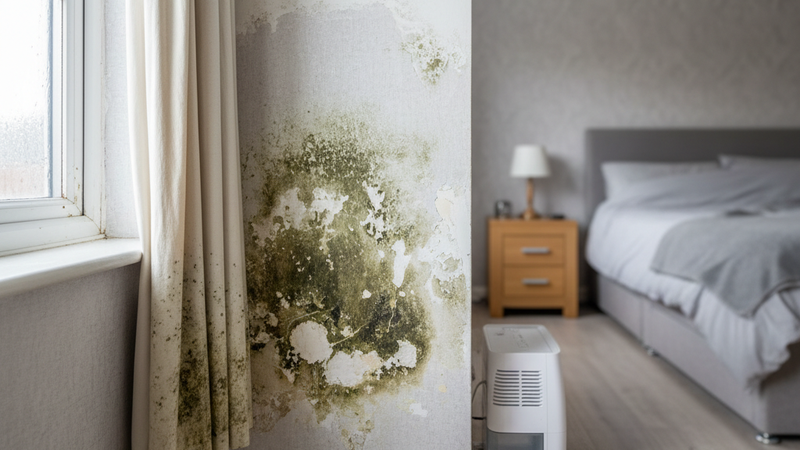
Finding green mould in your bedroom can be an alarming discovery. This common type of fungal growth, often appearing as fuzzy, slimy, or powdery patches, signifies excess moisture and can pose significant health risks if left unaddressed. Understanding its causes, impacts, and the proper methods for remediation is crucial for maintaining a healthy home environment, especially in the UK climate.
Understanding Green Mould in Your Bedroom
Green mould is a general term often used to describe various species of mould, including common culprits like Penicillium and some Aspergillus species, which typically present with a green, sometimes blue-green, hue. It thrives in damp, poorly ventilated areas, making bedrooms particularly susceptible due to factors like body heat, breathing, and condensation.
Common Causes of Bedroom Mould
Mould growth is almost always a symptom of an underlying moisture problem. In bedrooms, specific factors contribute to the ideal conditions for green mould to flourish:
- Condensation: Cold external walls combined with warm, moist internal air (from breathing, radiators, humidifiers) create condensation, especially behind furniture or in corners.
- Poor Ventilation: Lack of adequate airflow prevents moisture from escaping, trapping it within the room and increasing humidity.
- Building Defects: Leaky roofs, faulty guttering, rising damp, or plumbing leaks can introduce chronic moisture into walls, ceilings, and flooring.
- Inadequate Heating: Uneven heating or relying solely on portable heaters can lead to cold spots where condensation readily forms.
Identifying Different Types of Mould
While many types of mould can appear green, their exact identification often requires laboratory analysis. However, understanding general characteristics can be helpful:
- Penicillium: Often appears fuzzy or powdery, with colours ranging from blue-green to dark green. Commonly found on damp materials, food, and insulation.
- Aspergillus: Can be powdery or granular, often green, but also black, white, or yellow. Widely found indoors and outdoors, it’s a common allergen source.
- Other types: Less common green moulds may also occur, but the presence of any mould indicates a moisture issue that needs immediate attention.
Health & Safety Concerns Posed by Bedroom Mould
The presence of mould in your bedroom is more than just an aesthetic issue; it can significantly impact your health, especially as you spend a considerable amount of time sleeping there. Mould releases spores, which, when inhaled, can trigger various symptoms.
Health Implications for UK Residents
The NHS (National Health Service) provides clear guidance on the health risks associated with damp and mould. Exposure can lead to a range of respiratory problems and allergic reactions. Children, the elderly, and individuals with pre-existing conditions are particularly vulnerable.
- Respiratory Issues: Coughing, wheezing, shortness of breath, and exacerbation of asthma.
- Allergic Reactions: Sneezing, runny nose, red eyes, skin rashes, and irritation.
- Weakened Immune Systems: Individuals with compromised immunity are at higher risk of infections from mould.
- Long-term Health Effects: Prolonged exposure can contribute to chronic respiratory illnesses.
Important point
The NHS advises that if you have damp and mould in your home, you're more likely to have respiratory problems, respiratory infections, allergies or asthma. It can also affect your immune system. For more information, visit the UKHSA guidance on damp and mould.
Recognising Symptoms of Mould Exposure
It's essential to be aware of the symptoms that might suggest mould exposure, especially if they worsen when you're at home:
- Persistent cough or sore throat.
- Stuffy nose or sneezing.
- Irritated eyes or skin.
- Wheezing or difficulty breathing.
- Fatigue and headaches in some cases.
If you or members of your household experience these symptoms, particularly without a clear cause, mould in the bedroom should be considered a potential factor.
UK Regulations and Standards for Mould Remediation
In the UK, while there aren't specific laws dedicated solely to mould, its remediation falls under broader health and safety regulations and best practice guidelines. Compliance with these ensures not only effective removal but also occupant safety.
IICRC S520: The Professional Standard
The Institute of Inspection, Cleaning and Restoration Certification (IICRC) S520 Standard for Professional Mould Remediation is the globally recognised guideline for mould removal. While not a legal requirement in the UK, it is the benchmark for professional remediation companies. Adhering to S520 ensures a systematic and scientific approach:
- Assessment: Identifying the extent of mould contamination and the moisture source.
- Containment: Preventing the spread of mould spores during remediation.
- Air Filtration: Using HEPA filters to clean airborne spores.
- Removal: Physically removing mould-contaminated materials.
- Drying: Ensuring the affected area is completely dry to prevent recurrence.
- Post-remediation Evaluation: Verification that the mould has been successfully removed and the environment safe.
Professional remediators in the UK follow these principles to guarantee thorough and safe mould removal. You can find more details about IICRC standards on their official website.
Housing Health and Safety Rating System (HHSRS)
Under the Housing Act 2004, the HHSRS (Housing Health and Safety Rating System) assesses potential hazards in residential properties across England and Wales. Damp and mould growth is categorised as a significant hazard. Local authorities can compel landlords to take action to mitigate these risks. For social housing, Awaab's Law, in force since 27 October 2025, sets strict timelines for landlords to address hazards like mould.
Protecting Tenants
The Health and Safety Executive (HSE) provides guidance for landlords on maintaining safe properties. Landlords have a legal responsibility to ensure their properties are safe and free from hazards, including excessive damp and mould. More information can be found on the HSE website.
The Professional Mould Remediation Process
Attempting to clean extensive mould yourself can be hazardous and often ineffective, potentially spreading spores. Professional remediation follows a structured, safety-first approach to ensure complete removal and prevent recurrence.
Initial Assessment and Contamination Classification
The first step involves a thorough inspection to identify the mould species, the extent of contamination, and crucially, the underlying moisture source. Professionals use specialised equipment like moisture meters and hygrometers. Contamination is typically classified:
- Level 1: Small, isolated areas (less than 10 sq ft). Often handled with basic PPE and containment.
- Level 2: Medium areas (10-100 sq ft). Requires limited containment and more extensive PPE.
- Level 3: Large areas (over 100 sq ft) or mould in HVAC systems. Requires full containment, negative air pressure, and advanced remediation techniques.
Containment and Air Filtration Strategies
To prevent cross-contamination, the affected area is sealed off using plastic sheeting and negative air pressure systems. This creates a vacuum, ensuring mould spores do not escape into unaffected parts of the home. High-Efficiency Particulate Air (HEPA) scrubbers are used continuously to filter airborne spores from the remediation area.
Mould Removal and Post-Remediation Verification
Mould-affected materials that cannot be salvaged (e.g., plasterboard, insulation) are carefully removed and disposed of. Non-porous surfaces are cleaned with UK-authorised antimicrobial solutions. Once all visible mould is removed and the area is dry, a post-remediation verification takes place. This often includes visual inspection, moisture readings, and sometimes air quality testing (post-test) to confirm that mould spore levels have returned to normal, baseline levels.
Prevention and Maintenance in UK Bedrooms
Once mould has been remediated, the focus shifts to prevention. Addressing the root cause of moisture is paramount to avoid future outbreaks.
Controlling Moisture and Ventilation
- Increase Ventilation: Open windows daily for at least 15-30 minutes, even in winter. Use extractor fans in bathrooms and kitchens.
- Manage Condensation: Keep bedroom consistent with overall home temperature. Avoid drying laundry indoors, or if necessary, ensure excellent ventilation. Use trickle vents if available.
- Address Leaks Promptly: Fix any plumbing leaks, roof defects, or rising damp issues immediately.
- Dehumidifiers: In persistently damp areas, a dehumidifier can help control humidity levels, ideally keeping them between 40-60%.
Monitoring and Regular Cleaning Practices
- Regular Checks: Periodically inspect behind furniture, under beds, and in corners for early signs of mould.
- Clean Surfaces: Wipe down cold surfaces (windows, external walls) regularly to remove condensation before mould can take hold.
- Avoid Clutter: Keep furniture slightly away from walls to allow air circulation. Avoid overfilling wardrobes and ensure bedding is dry before storing.
- Proper Waste Management: Dispose of organic waste promptly.
When to Call Professional Mould Remediation Experts
While small patches of surface mould might be manageable for a homeowner to clean with appropriate precautions, there are clear indicators that professional intervention is necessary.
Signs Your Mould Problem Requires Experts
- Large Areas of Mould: If mould covers an area larger than 1 square meter (approximately 10 sq ft).
- Persistent Mould: If mould returns quickly after cleaning.
- Hidden Mould: If you smell a musty odour but cannot see the mould, it may be hidden behind walls, under flooring, or in ceiling voids, requiring invasive inspection.
- Health Concerns: If occupants are experiencing health issues attributed to mould exposure.
- Contaminated HVAC: If mould is present in your heating, ventilation, and air conditioning system.
- After a Flood or Major Leak: Extensive water damage almost always leads to mould, requiring professional drying and remediation.
Benefits of Professional Mould Remediation
Engaging professionals ensures that the problem is not just masked but fully resolved, adhering to high standards like IICRC S520.
- Thorough Contamination Assessment: Experts accurately identify the type and extent of mould and the source of moisture.
- Safe Removal: Professionals use specialised equipment (PPE, containment, air scrubbers) to prevent spore spread and protect occupants.
- Effective Treatment: They have access to industrial-grade cleaning agents and drying equipment, ensuring complete removal and preventing recurrence.
- Moisture Source Identification: Crucially, they identify and often assist in addressing the root cause of the moisture to prevent future growth.
- Post-Remediation Verification: Ensuring the property is safe and mould-free after remediation.
Investing in professional mould remediation protects your health and the structural integrity of your home. If you're concerned about mould in your bedroom, don't hesitate to seek expert advice. You can explore our blog for more insights, or use our cost calculator to estimate potential remediation expenses. For further academic insights on indoor air quality and mould, resources from UK universities like University of Bath often provide valuable information.